UNS Ural
World War ZUNS Ural is the former Soviet naval vessel that became the first broadcast hub of Radio Free Earth, turning an obsolete warship into one of the central communications instruments of World War Z. Its importance lies in a reversal: a ship once designed for command, surveillance, and military power was repurposed to fight ignorance with information. From its decks, survival knowledge crossed borders even as the vessel’s receiving systems absorbed voices that could not be answered.
From Naval Relic to Broadcast Hub
UNS Ural had served first in the Soviet and later in the Russian Federal Navy under the designation SSV-33. Over the course of its career it had been a command-and-control ship, a missile-tracking platform, and an electronic-surveillance vessel. Its systems were so elaborate that they were reportedly too complicated even for its own crew, leaving the ship a white elephant rather than an effective modern asset. For much of its service life, it remained tied to a pier at the Vladivostok naval base, where it supplied additional electrical power to the facility.
The catastrophe gave this neglected vessel a new function. During World War Z, UNS Ural sheltered alongside American naval vessels and hundreds of civilian ships at Ulithi Atoll, a former forward base of the United States Pacific Fleet during World War II. The ship later became a museum associated with the achievements of Radio Free Earth and the focus of the British documentary Words at War, but its historical significance began when its reactors were brought back online and its massive communications facilities were adapted to interface with the global satellite network. The work included replacing its spent fuel rods, an achievement described by the narrator without technical certainty, but the result was unmistakable: the ship became a mobile international information center.
Radio Free Earth and the War Against Ignorance
When the narrator joined the project, it was still called the International Program for Health and Safety Information. The later name, Radio Free Earth, came from the individuals and communities that monitored its broadcasts. The project emerged only a few months after the South African Plan and years before the Honolulu Conference, taking its basic model from Radio Ubunye, South Africa’s multilingual broadcasts to citizens isolated by the outbreak. Radio Ubunye could not provide material aid, so it supplied practical knowledge and systematically addressed the falsehoods circulating among its listeners. UNS Ural extended that method to a global audience.
The ship’s mission was founded on the belief that ignorance, rather than the undead alone, was the real enemy. Misinformation, superstition, disinformation, and silence had helped make the disaster so destructive. Radio Free Earth therefore transmitted concrete instructions on matters such as purifying water, constructing an indoor greenhouse, and cultivating and processing mold spores for penicillin. It also had to establish the vocabulary of the crisis. Translators encountered terms such as “quisling,” “feral,” “Lobo,” and the supposed miracle cure of Phalanx, converting unfamiliar emergency language into material that could be recorded and understood in many regions.
The ship’s international reach depended on an extraordinary human workload. The narrator specialized in the languages of the Indian Subcontinent and worked with Mister Verma, a translator discovered in a refugee camp in Sri Lanka. The two had previously worked together at their country’s embassy in London, but their wartime assignment was vastly more demanding: for a time, they were responsible for covering a population of roughly a billion people. They worked eighteen, sometimes twenty hours a day, processing dispatches arriving every minute and preparing urgent material for broadcast. The ship’s communications machinery thus depended not only on restored reactors and satellite links but also on translation labor performed under relentless pressure.
Information Reception and the Voices of the Stricken
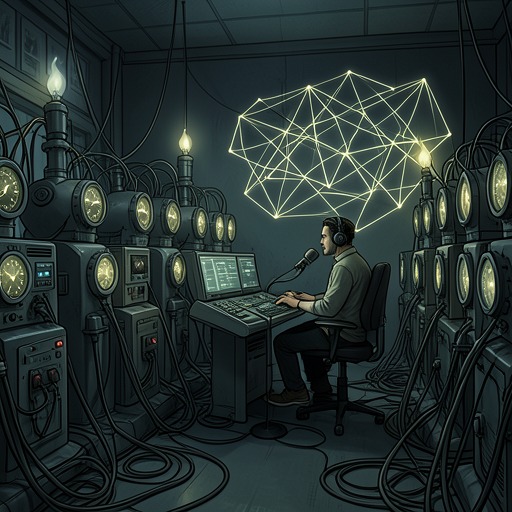
UNS Ural did not generate all the information it broadcast. Its Information Reception department received findings from experts and think tanks located in government safe zones, with much of the material arriving over conventional open civilian bands. Operators then passed the data to the translators and interpreters. The vessel functioned as a relay in a global information ecology: knowledge was produced elsewhere, transmitted through whatever channels remained available, reorganized aboard the ship, and sent back out as practical guidance.
Those same channels carried the unfiltered distress of ordinary people. Civilian frequencies were crowded with pleas from starving families, burning temporary fortresses, and communities whose defenses had been overrun by the living dead. The operators were forbidden to answer because official transmissions took priority. The result was a cruel asymmetry: the ship could hear millions of people but could not intervene, and often could not even acknowledge that it had heard them.
The psychological cost became inseparable from the vessel’s function. When the last broadcast came from Buenos Aires and a famous Latin singer played a Spanish lullaby, an eighteen-year-old Russian sailor serving as an Information Reception operator killed himself across his instruments. He was the first of the operators to do so; by the postwar period, none of them remained alive, including the narrator’s Belgian friend. The ship’s public role was to deliver clarity, yet its internal spaces accumulated the voices of those for whom clarity arrived too late. Its broadcasts represented communication as rescue, while its receiving room revealed communication as an unbearable archive of helplessness.
A Global Counterforce to Rumor
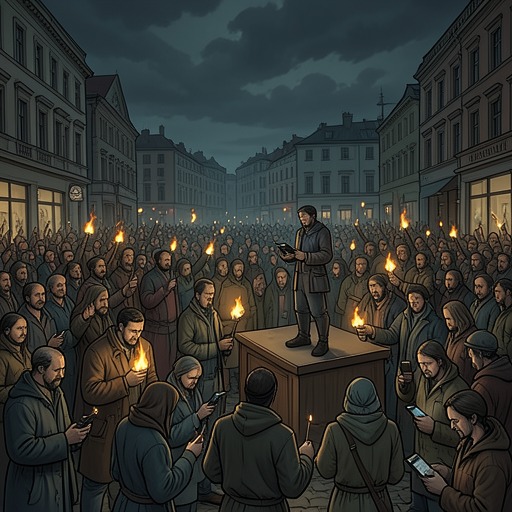
The need for UNS Ural’s work was intensified by the failures of other media. Early warnings could be obscured by mistranslated or deliberately unreadable communications, as when messages from Chinese sources appeared to contain reports of a virus that killed victims and reanimated their corpses. Such reports were dismissed as coded military language. Later, institutions and media organizations had incentives to treat the outbreak as manageable or old news, especially after Phalanx appeared to reduce reported cases. Alternative outlets that warned that the dead were walking were dismissed by much of the public. Against this environment of denial, selective attention, and commercial fear, Radio Free Earth attempted to make reliable information a shared survival resource.
The wider communications network also included film, satellite surveillance, and covert radio interception. Films distributed through shelters and transport routes could reduce cases of Asymptomatic Demise Syndrome, while satellite imagery exposed battles with terrifying visual precision. UNS Ural belonged to the same broad struggle over what could be known, but its distinctive instrument was translation: it transformed scattered expertise and emergency testimony into words that could cross linguistic and political boundaries. That function made the ship less a passive transmitter than a working institution of global coordination.
Historical and Symbolic Significance
UNS Ural embodies the conversion of military infrastructure into collective survival infrastructure. Its earlier identities—command ship, tracking platform, surveillance vessel, and dockside power source—belonged to systems organized around strategic control. Its wartime identity was different: it served refugees, civilian listeners, translators, experts, and isolated communities whose survival depended on usable facts. The transformation did not erase the ship’s militarized past; it redirected its machinery toward a conflict in which information itself became a form of defense.
Its significance is also inseparable from the global circulation of disease, people, commodities, and official silence. The outbreak moved through smuggling routes, organ markets, hospitals, refugee movements, and international transport, while governments and commercial institutions concealed or softened what they knew. UNS Ural answered that fractured circulation with another kind of movement: a continuous passage of warnings, instructions, corrections, and reports across borders. The ship could not save everyone, and it could not reply to every desperate voice, but it helped create the factual common ground on which coordinated survival became possible.
In retrospect, the vessel stands as both a monument and a wound. As a museum at Ulithi Atoll, it commemorates the achievements of Radio Free Earth. Yet the testimony associated with it preserves the cost of those achievements: the exhaustion of translators, the operators destroyed by the voices they received, and the knowledge that many broadcasts were addressed to people already beyond material rescue. UNS Ural’s legacy therefore rests not on the fantasy that information alone defeats catastrophe, but on the harder claim that without accurate information, catastrophe becomes vastly more lethal—and that even a discarded warship can become an instrument for reclaiming a shared future.